
5 Lessons from Veteran CSA Farmers
.png)
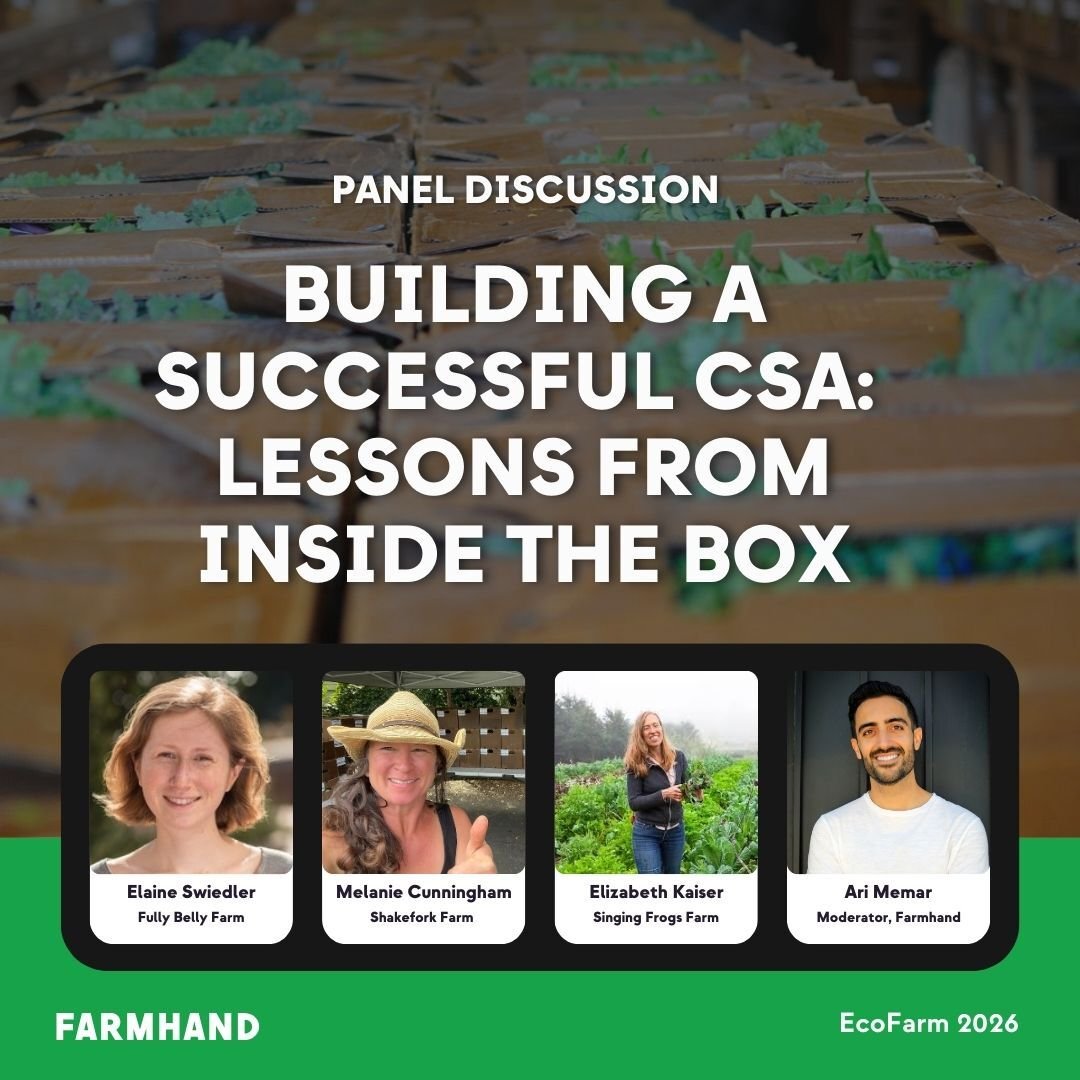
In case you missed it, last month at EcoFarm 2026, we gathered a room full of farmers for a practical, honest conversation about what it really takes to run a strong, long-term CSA program.
On stage were three veteran farmers who’ve built programs serving thousands of members over decades.
- Farmer Elaine Swiedler - Full Belly Farm (Davis, CA)
- Farmer Melanie Cunningham - Shakefork Community Farm (Carlotta, CA)
- Farmer Elizabeth Kaiser - Singing Frogs Farm (Sebastopol, CA)
And they didn’t hold back.
They dive into:
- How much of their revenue actually comes from CSA
- What breaks first when you scale (and how to prevent it)
- Production planning systems that work
- Fulfillment workflows that protect trust
- How they grow through referrals and pickup partners
- What they’d do differently if starting in 2026
This is one of the most useful CSA conversations I’ve heard in years.
We recorded the full 70-minute session, and you can now Watch On-Demand.
Here are five lessons that stood out. 👇
1. Strong Relationships Are Built on Systems (and How You Handle Mistakes)
Strong relationships don’t come from answering every text at midnight.
They come from clear processes, thoughtful communication, and boundaries that protect both farmers and members.
Every farm makes mistakes — missing items, wrong counts, late deliveries. The difference is what happens next.
These farmers shared their “default response” when something goes wrong, and how strong follow-up systems turn small problems into trust-building moments.
The most successful farms aren’t working more.
They’re working more intentionally.
2. Sustainable Growth Comes from Quality and Community
None of these farms grew by chasing ads.
They grew by delivering consistently great boxes, earning trust, and making it easy for members to spread the word.
That meant strong word-of-mouth, thoughtful pickup partnerships with local businesses and volunteers who became informal ambassadors and porch hosts.
When the product is right, growth follows.
🎥 Hear How they Build Those Partnerships
3. Design a "Box Recipe" for Fulfillment, Not Just the Field
While harvests and seasons change, member expectations don’t.
Each farmer shared their own “recipe” for building a box that feels like good value, holds up through packing and transport, and is priced to work for the farm all season — even as crop availability fluctuates.
But that recipe doesn’t stop in the field. A beautiful harvest doesn’t always survive the packing line.
They think through durability, stacking, temperature, and pickup flow so boxes arrive the way they intended.
4. Price for Sustainability, Not Just Sign-Ups
All three panelists shared how they’ve adjusted pricing and portions over time.
Not to maximize short-term sales — but to make sure the CSA works financially for the farm long-term.
Healthy pricing = healthy farms.
5. The Farms That Win in 2026 Are Adapting Now
The most successful farms aren’t constantly reacting.
They’re investing in systems — for planning, packing, communication, and training — so the same problems don’t repeat every season.
That’s what gives them their time back.
And it’s what allows them to adapt as expectations change, operations grow more complex, and margins tighten.
These farmers are already adjusting — in practice, not theory — to stay profitable and sane.
If you’re planning your season, refining your systems, or feeling growing pains, this conversation is worth your time.
Related Content
Get the story in your inbox every week.
Real success stories from working CSA and dairy farms–delivered every week (free).
Read by 5,000+ farmers every Friday