More playbooks
All playbooksThe Friday playbook
One story a week from a working farm.
Read by 5,000+ farmers every Friday. No product pitch.
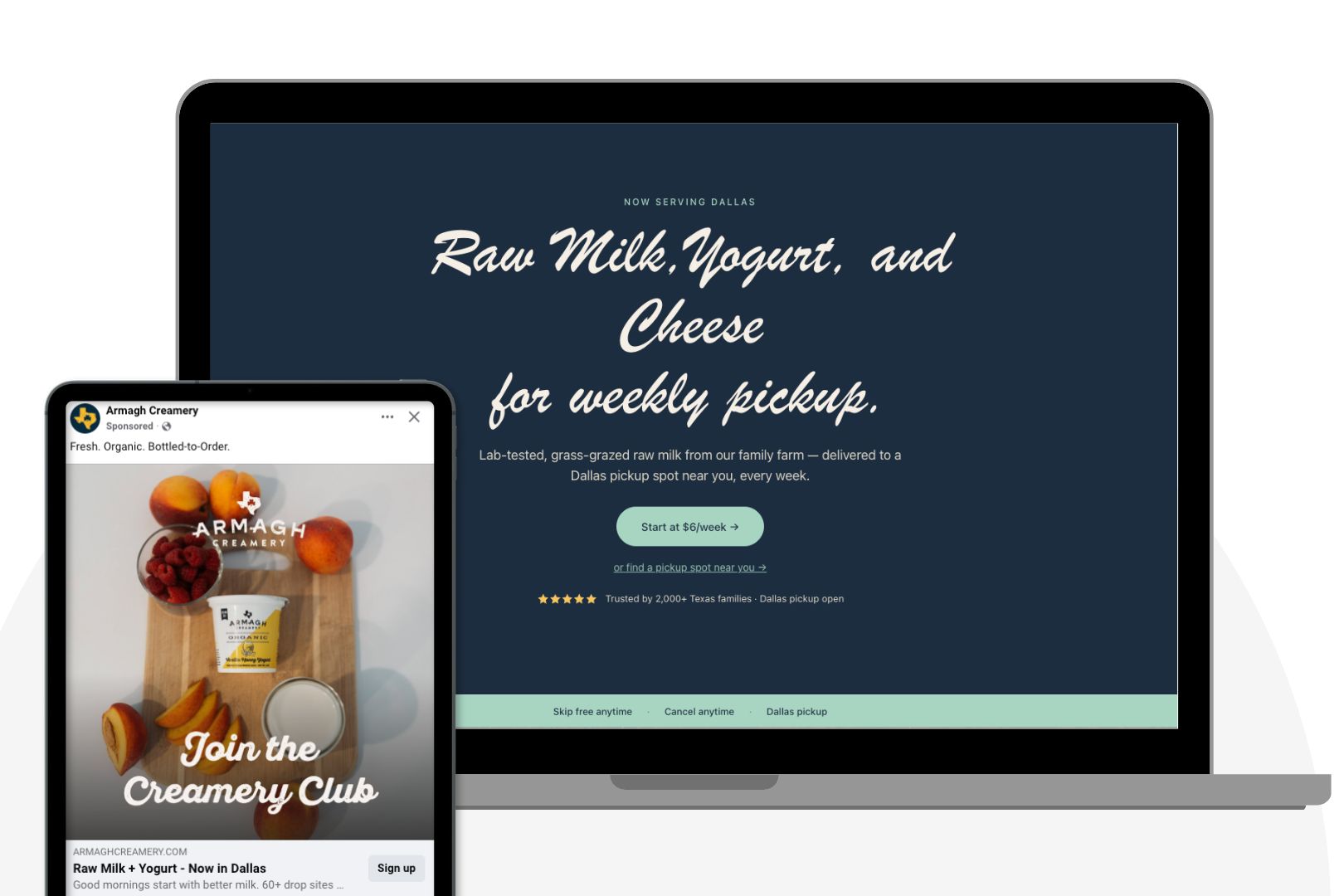
Meet Katie McDowell — the co-owner and operator of Armagh Creamery, one of the nation's largest raw dairies, based out of Dublin, TX. Her subscription program, the Creamery Club, had been growing the traditional way: farmers' markets and word of mouth. She wanted more visibility, and a way to reach the Dallas market she wasn't yet serving.
So we ran an experiment–$2,000 of Instagram and Facebook ads across 40 days.
The goal was simple: new Creamery Club members.
The result was bigger than that.
Over 40 days, the ads were clicked more than 10,000 times — 3 to 4 times what an average Instagram ad pulls. From those clicks, more than a dozen new recurring members signed up — each one worth $400+ a year in value. We earned back roughly $2.50 for every $1 we spent.
But the flip nobody saw coming was the retail.
25+ one-time retail orders showed up at pickup locations that had sold zero the month before. People who, until this campaign, were strangers to Armagh. They tasted the milk once. And some of them — Katie's tracking it now — are signing up for the Creamery Club on their own.
Which made us rethink what Facebook ads are actually for.
Most of us think of Facebook as a fast way to get a ton of signups. Throw a few hundred dollars at a campaign, watch members roll in by next week.
That's not how Meta works.
Meta needs about $1,000 and a full month just to learn who your audience is — what they look like, what they click, what they ignore. That's the "learning phase." Until Meta has that data, your ads are basically guessing. Which is why we recommend a $3,000 minimum commitment over three months when farmers come to us about Facebook. Anything less, and you're paying for the learning phase without ever getting to the part where it pays back.
The other thing nobody warns you about: the average person needs to see an ad 8+ times before they buy. Eight. For a $400+ recurring purchase like a Creamery Club membership — or a non-cancelable herdshare — that's not unusual. It's the floor.
Which means Facebook ads aren't a fast-conversion machine. They're a nurture engine. The same person sees your bottle, your bag, your farm — over and over — until you're the obvious answer when they finally decide to try local. Some of them try you by grabbing a one-off bottle at a retail spot. Some click through but don't sign up until month two. Some take six months. That's the arc.
So the question isn't "how fast can I get signups?" It's "how do I cut Meta's learning curve so my ad spend starts working sooner?"
That's what this post is about. We already did the 40-day learning phase on Armagh's budget. We figured out which photos worked, which words worked, which buttons worked, which audiences responded. You don't have to lose a month and $1,000 figuring it out yourself. Here's what we learned — five things, in order of how much they mattered.
The single best-performing line, across several variations, was:
"Raw Milk Pickup Spot Near You"
Five words. No mystery. No drama. It tells you what it is. It implies the next move.
It beat every clever line we tried — including the moody-poetic "experience" framings most brands default to.
The winning headlines all did three things:
If your headline starts with a verb like "Discover" or "Experience," try the boring version first. You may be surprised.
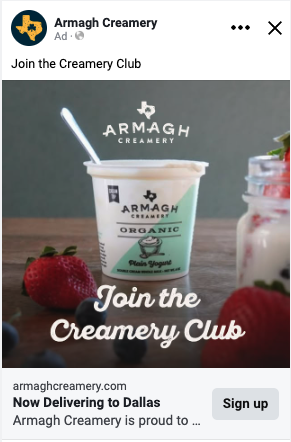
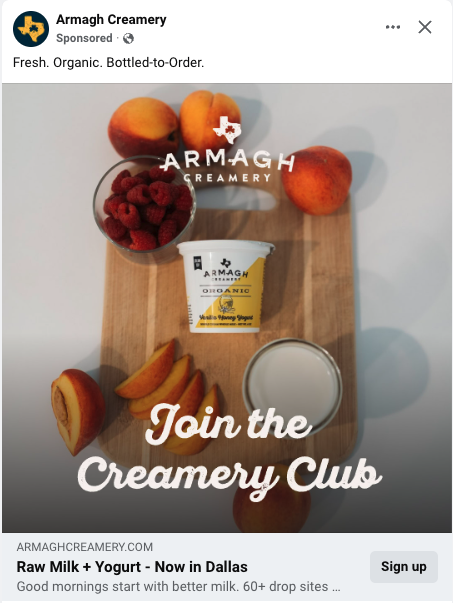
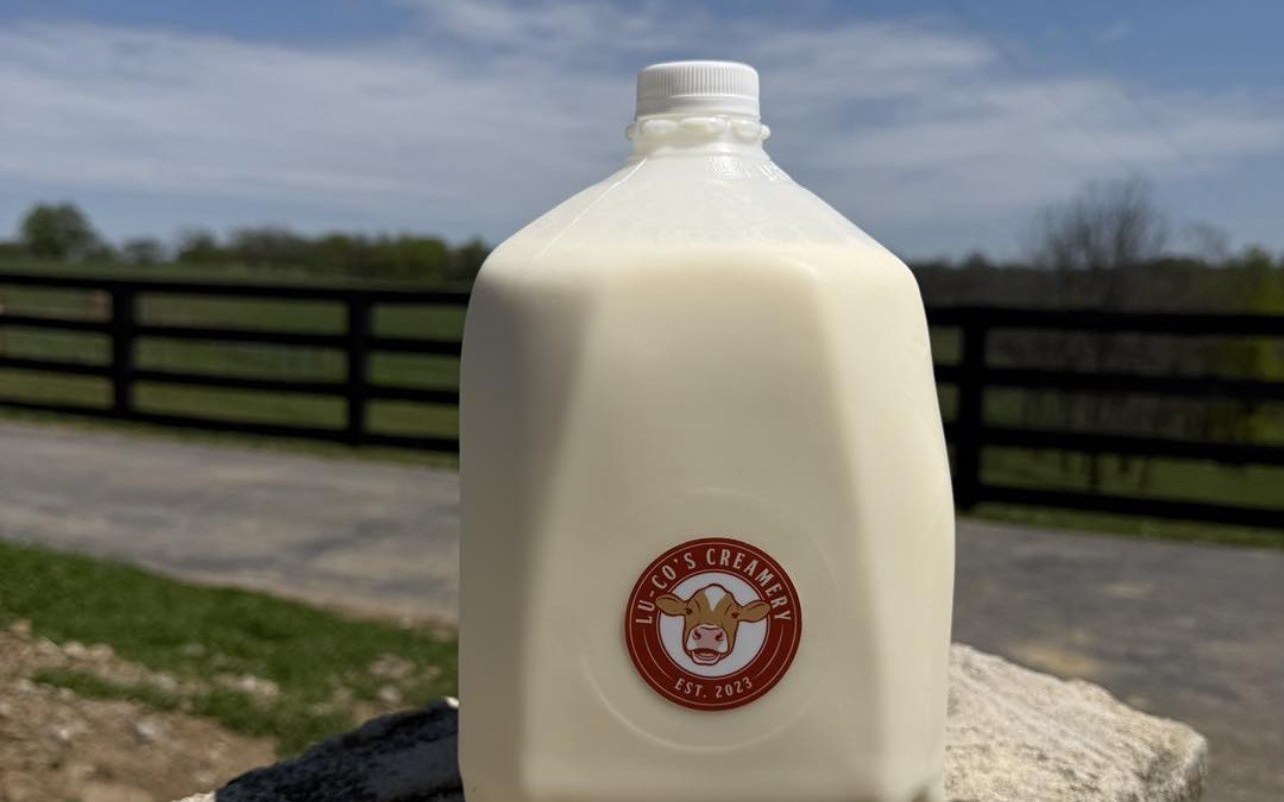
The ads that worked shared a visual recipe so consistent it felt almost repetitive when we lined them up:
.png)
What killed performance every time: anything that looked AI-generated. Even subtly. Even in the lighting, even in a too-smooth shadow. The audience for raw dairy is the audience most skeptical of fake imagery. The moment a photo feels synthetic, you've lost their trust before they've read your headline.
If you can shoot one good phone photo of your product on a wooden table in morning light, you have everything you need.
Two words mattered more than you'd think.
The winning button was "Sign Up." We tested it against the standard alternatives — Learn More, Order Now, the usual suspects. "Sign Up" won by enough that we stopped testing.
Why: because the other buttons all imply ambiguity. "Learn More" makes me wonder what I'll have to read before I can buy. "Order Now" feels pushy if I'm not ready. "Get Started" sounds like a signup wall.
"Sign Up" is honest. You tap it, you give your email and pickup location, you're in. The contract is clear before the click.
Here's the part most farms get wrong.
You spend two weeks on the ads, $200 on the photos, $2,000 on the budget — and then you send everyone to a website that takes eight seconds to load, has the signup form three scrolls down, and asks for fourteen fields including birthday and how they heard about you.
The landing page is where the ad spend either compounds or leaks. The math is unforgiving. If 5 out of every 100 people who visit your page sign up, and 10 out of 100 sign up on a peer's page, you're paying twice as much per member for the same ad budget. The landing page is the lever. Most farms ignore it.

Now we're going to use a few ad-platform words. Bear with me — they're worth knowing, even if your eyes glaze.
This is the part most farms miss entirely, because it's invisible until you turn it on.
When 6,000 people visit Armagh's signup page over 40 days, only some of them sign up. Most of them — interested but not ready, distracted, on their way to do something else — scroll on and forget.
But with tracking in place, those 6,000 people are now a known audience. Instagram knows they clicked. Instagram knows they visited the page.
Next month, we can show those same people ads again. And the cost to reach them the second time is a fraction of the cost the first time — because they're no longer cold. They've heard of Armagh. Their brain registers the brand instead of skipping it.
This is the compounding piece. Every month you run ads, you're not just signing up this month's members. You're building next month's audience at a discount.
What "tracking" actually means, in practical terms:
Without these three things, you're starting from cold every single month. With them, your second month of ads costs less per signup than your first. Your third costs less than your second. By month six, your warm audience is doing more work than your cold targeting.
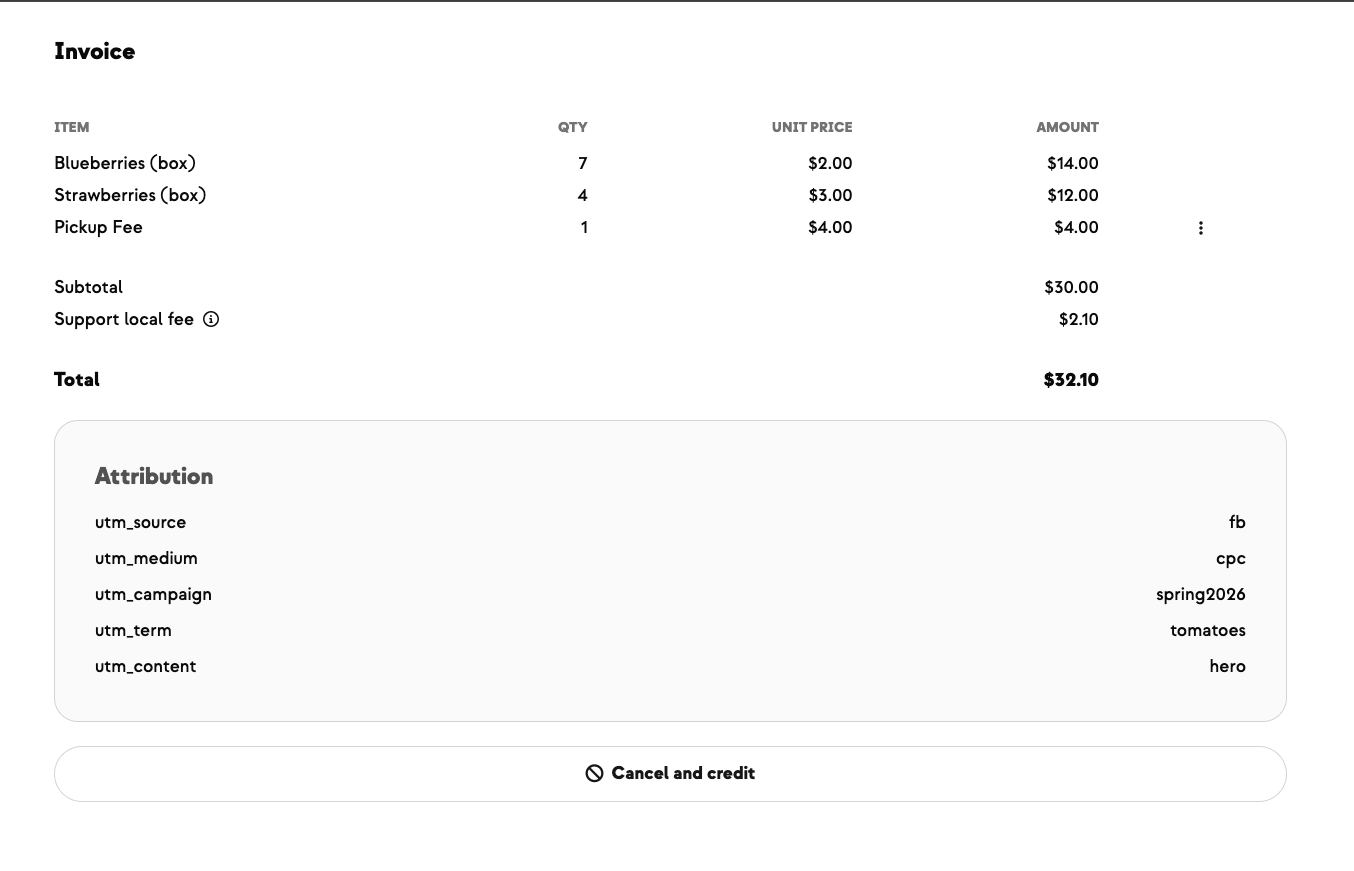
Farmhand members get this built in — pixel installed, UTMs auto-tagged, audiences synced. So every new purchase is mapped to a customer and the ad that converted them.
If we had to summarize the entire 40-day test in one sentence: stop trying to be clever, start being clear.
The winning headline was the boring one. The winning image was the simplest one. The winning button was the two-syllable one. The winning strategy was setting up tracking so this month's visitors become next month's customers, at a lower aquisition cost.
Boring beats clever. Boring scales. Boring compounds.
Your social media ads' job isn't to land the sale. It's to start the conversation. Once someone has your milk in their hand or your brand in their head, the loyalty work mostly happens on its own.
 Megan NeubauerPure Land FarmMcKinney, TXEvents · U-pickEvents


.png)

.jpeg)




.jpg)


.png)
.webp)