More playbooks
All playbooksThe Friday playbook
One story a week from a working farm.
Read by 5,000+ farmers every Friday. No product pitch.
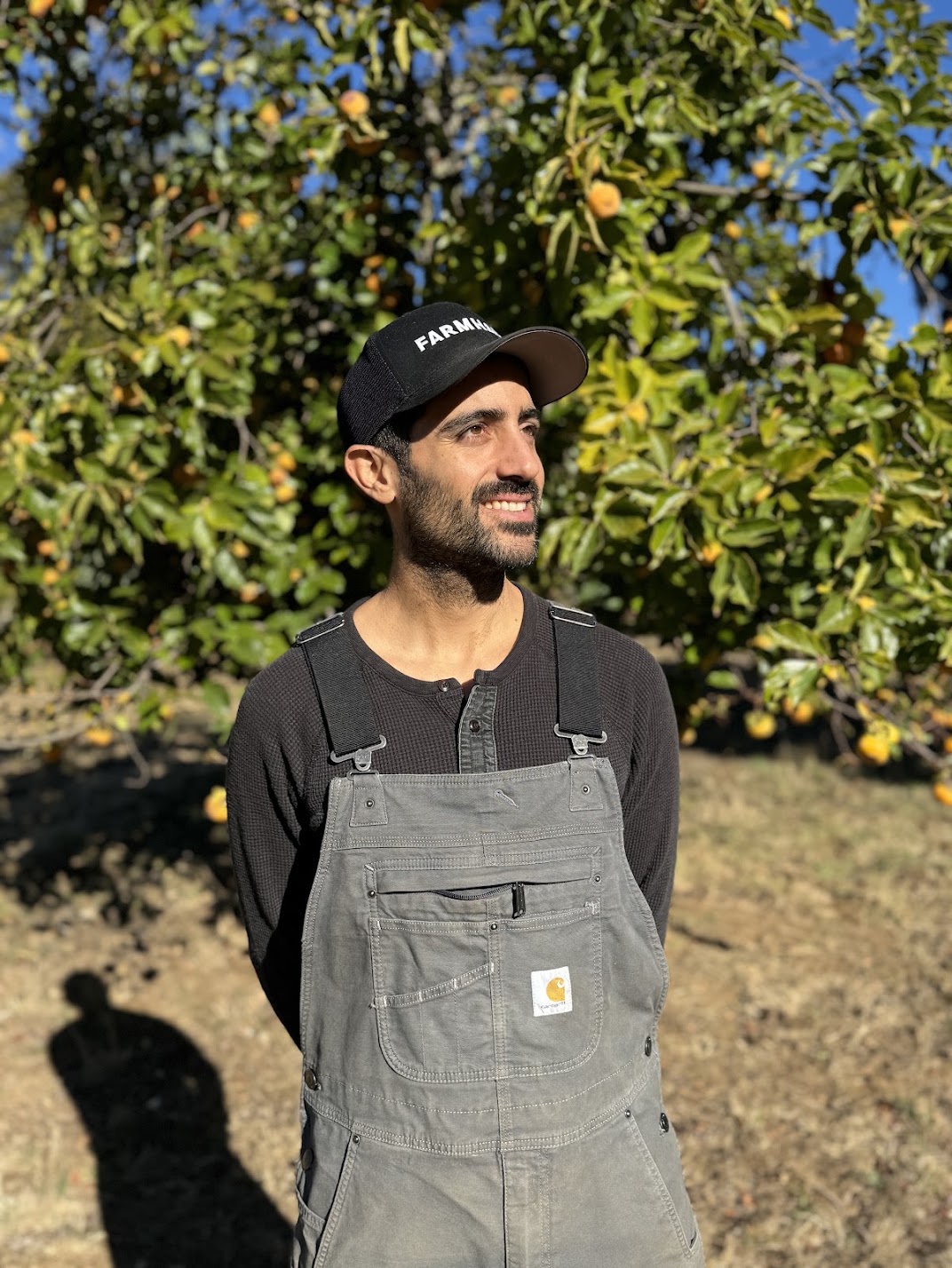
Ari is the founder of Farmhand, and grows apples and pears on five acres outside Sebastopol, California. He's also a CSA member who buys quarter and half animals and drinks local milk — on both sides of the software he built. Here's his case for on-farm events.
An afternoon on your farm is the cheapest customer you will ever get.
Almost every piece of software a farm can buy treats it as a side feature — ticketing bolted on somewhere around the fourth menu, if it's there at all. I think that's backwards.
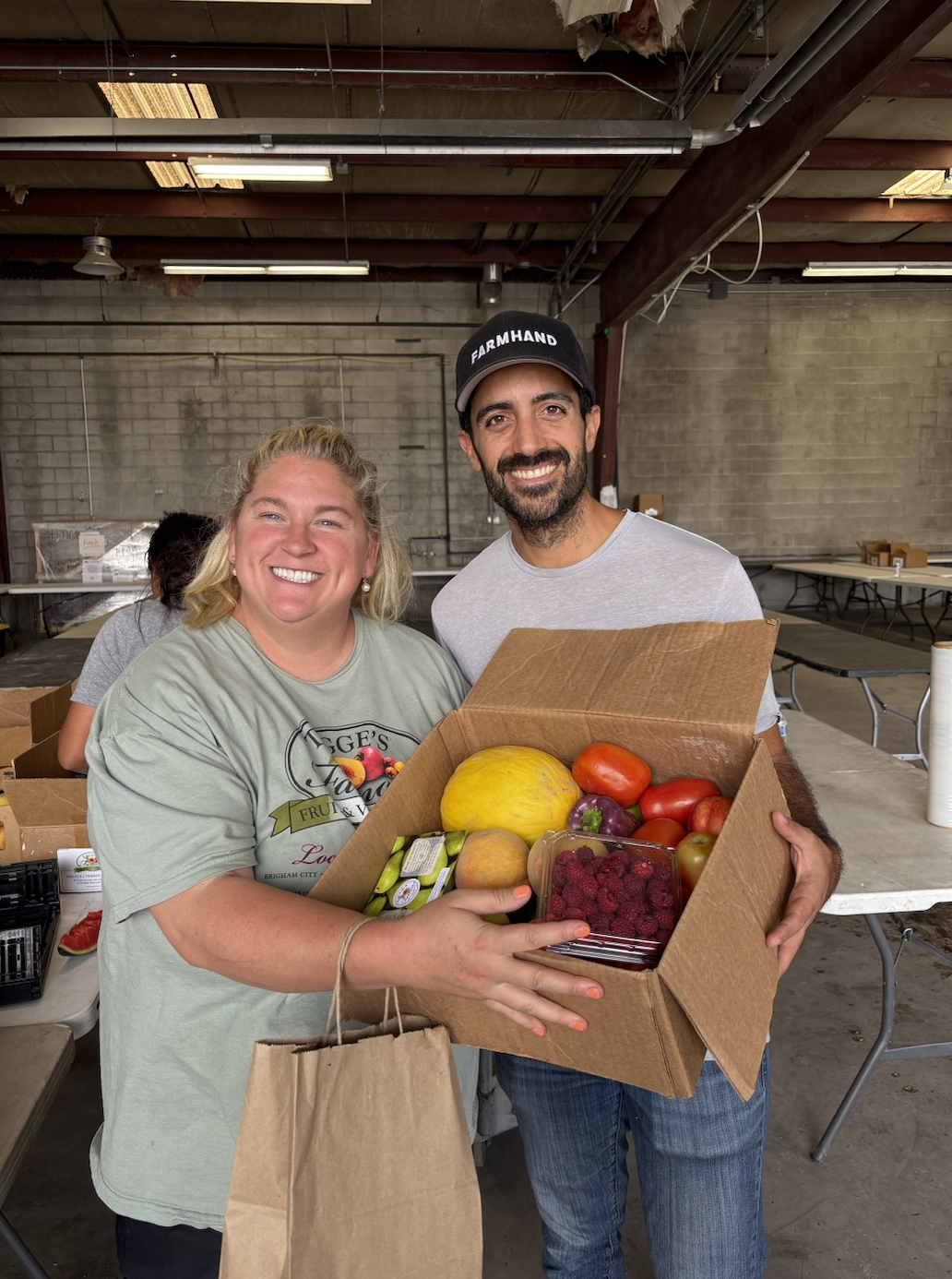
I have five acres outside Sebastopol. Apples mostly, some pears, plums, cherries, lemons, and other fruit I am experimenting with.
I'm also on the other side of the transaction — I'm a CSA member, I buy quarter and half animals, I drink local milk. So when I show up at somebody's farm I'm part customer, part grower, and mostly a guy who knows what the work costs.
Here's what I can tell you about those visits. I have never once walked onto a farm and found people sitting behind computers. I can say that definitively. People are in the field. There's an endless list, and the weather sets the deadlines — this has to come out by Thursday or you lose it — so the day doesn't end when you're tired. It ends when it's done (any fellow headlamp farmers out there can relate).
Farmers are the hardest working people I know. Everything we build starts from one question: what can we actually do to help?
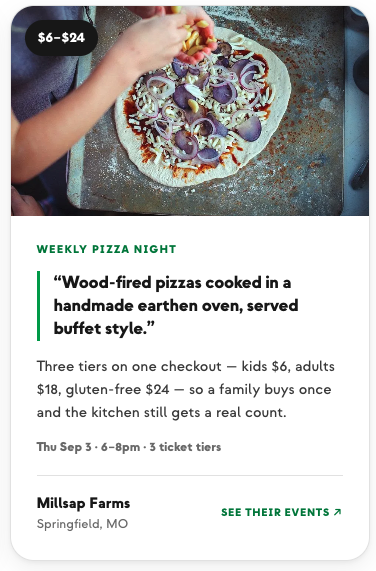
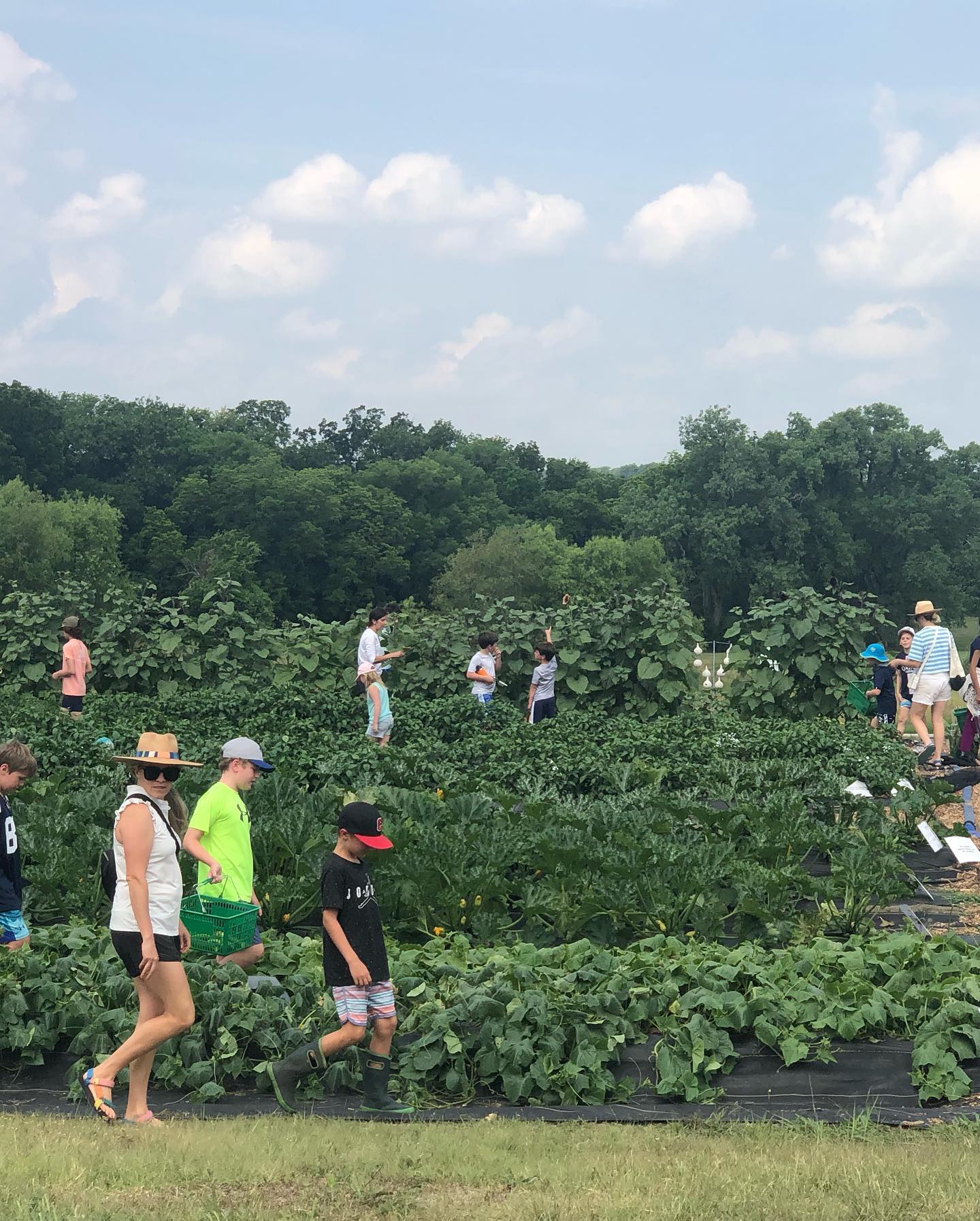
Curtis Millsap runs pizza night at his farm in Springfield, Missouri. Thursdays, May through October. Two hours. About 250 people come every week.
Across a season that's six thousand people who now know his farm by name. They know where the driveway is. They know which of his kids took their ticket. He spent nothing on ads to get any of them there — they paid to come.
Curtis says it better than I can: "Here we're being paid to collect an email and contact list. That's pretty sweet."
Most businesses pay a platform to rent an audience they never get to keep. Curtis got paid to build one he owns outright.
The ticket revenue is real, and in a shoulder season it matters. But the ticket isn't where the money is. The list is where the money is, and the list outlives the event by years. A pumpkin patch on one October Saturday is a CSA sign-up the following March, a Thanksgiving turkey order, a farm dinner in June, a family that brings two more families next fall. That's not a marketing funnel diagram. That's just what happens when someone stands in your field and likes it.
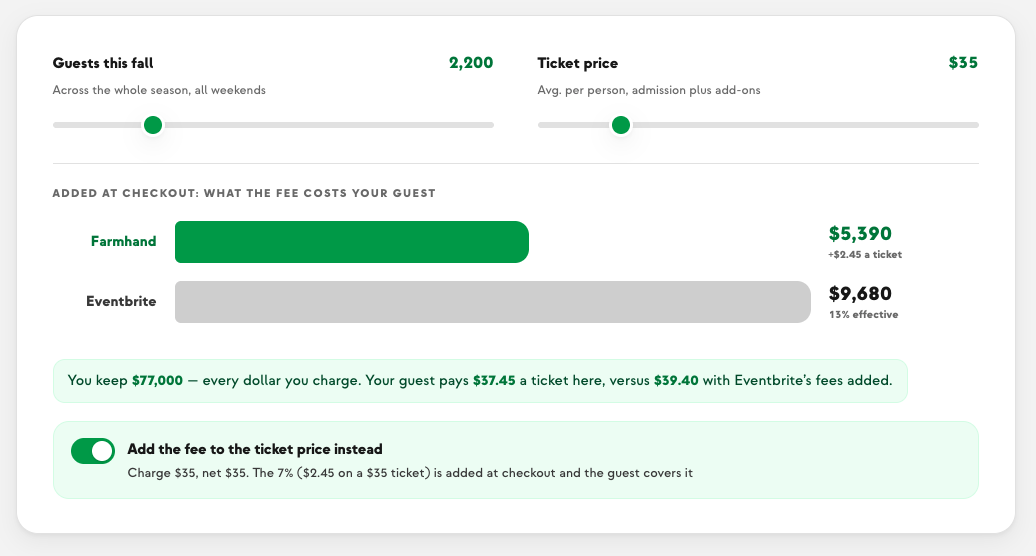
We take 7% when a ticket sells. Card processing is inside that number, not stacked on top of it. Eventbrite’s effective rate lands closer to 17%. On a season of 1,200 guests at $20 a ticket, that’s $22,320 in your account instead of $19,908 — about $2,412 in difference. And that doesn’t even include the cost of texts, emails, and admin time — which is included in Farmhand.
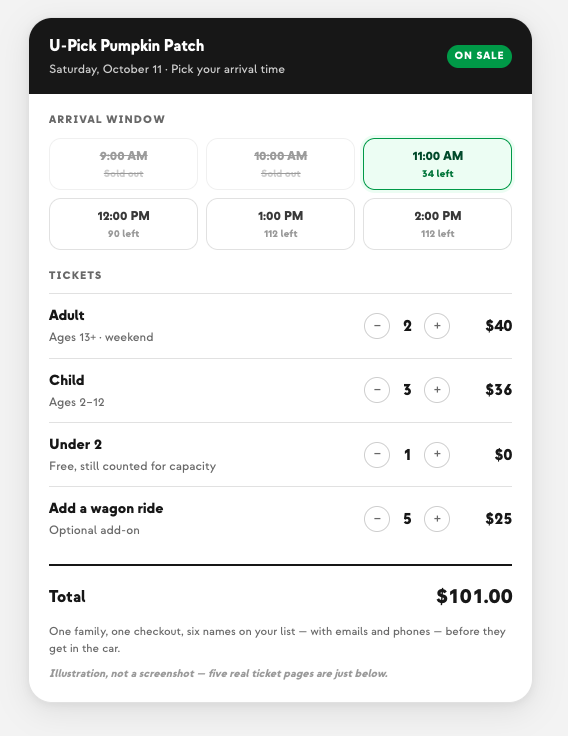
There's no setup fee. No monthly charge for events. If you put a September date on sale in July and nobody buys, you owe us nothing. If you don't open at all one weekend, you owe us nothing.
We get paid when your event works. Only then.
I want to be clear that this is the pricing, not a promotion — there's no clock on it and nothing expires. Farmers keep about thirteen cents on every dollar of what they grow. The last thing a farm needs is one more fixed cost betting against a bad season. If I believe an afternoon on your farm is worth what I've just said it's worth, then the honest way to say so is to take the risk alongside you, not to charge you for the privilege of finding out.
If I'm wrong about events, we make nothing.
That's the bet.
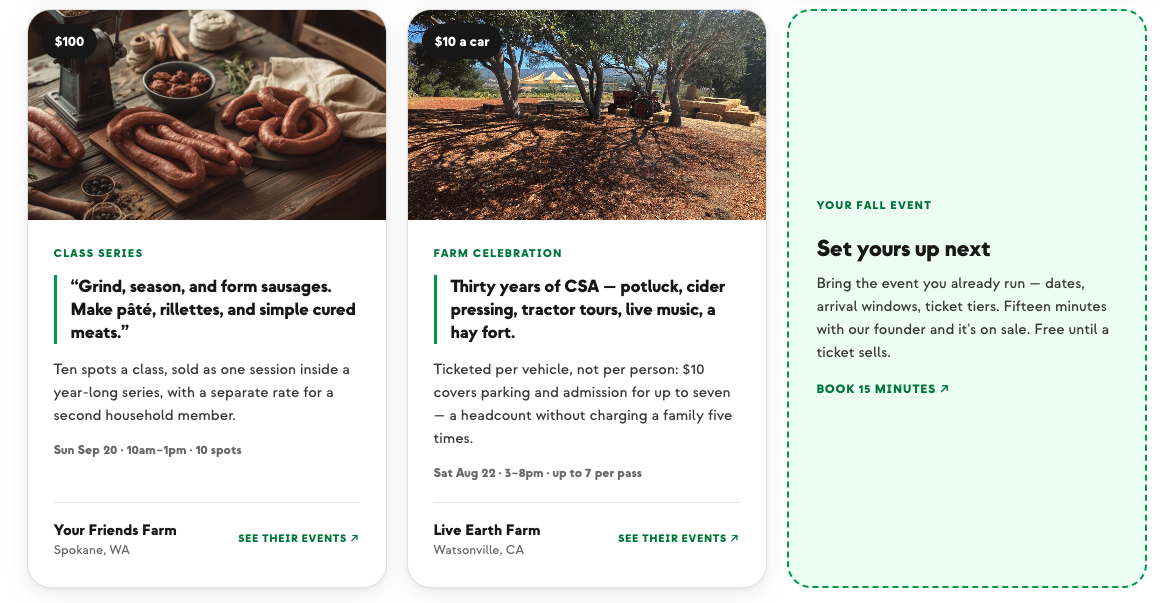
Not book a demo (though I'll take one, and it's me on the call, not a sales team).
Put one event on sale. One. It takes about ten minutes and costs nothing until somebody buys a ticket. Pick something you were going to do anyway — a u-pick Saturday, a farm dinner, a class you've run before for free — and put a ticket price on it.
Then look at who shows up, and look at the list you have afterward.
That's the whole ask. I think you'll see what Curtis saw.
 Megan NeubauerPure Land FarmMcKinney, TXEvents · U-pickEvents


.png)

.jpeg)




.jpg)


.png)
.webp)