More playbooks
All playbooksThe Friday playbook
One story a week from a working farm.
Read by 5,000+ farmers every Friday. No product pitch.
Ask ten farmers whether markets are still worth it and you'll get a real argument.
The case against is easy to make and often correct. Fees keep climbing. Gate counts keep sliding. A market takes the whole day, plus the harvest and pack before it and the unload after. Plenty of good farms have run the numbers, cut back to one market, and never looked back.
So when a farm doing sixteen markets a week says they're worth it, it's worth understanding exactly what they mean.
JR Organics farms 150 certified organic acres in Escondido, California. Fourth generation, certified organic since 1986, selling across San Diego, Los Angeles, Orange and Riverside counties. Their CSA nearly doubled in the last twelve months.
We asked Michael Clark to explain it. This one is in his words.
🎬 Watch the 2-minute interview
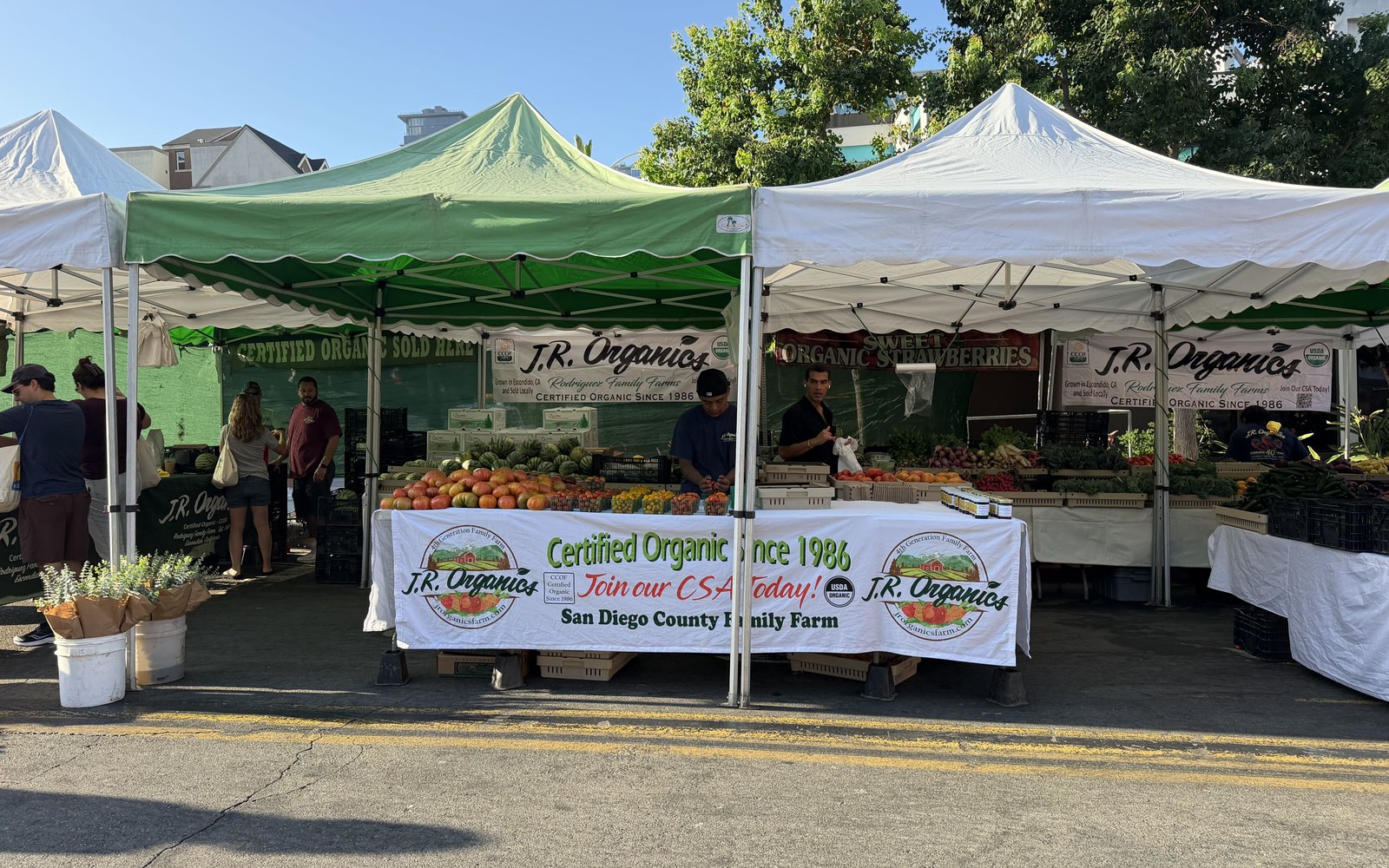
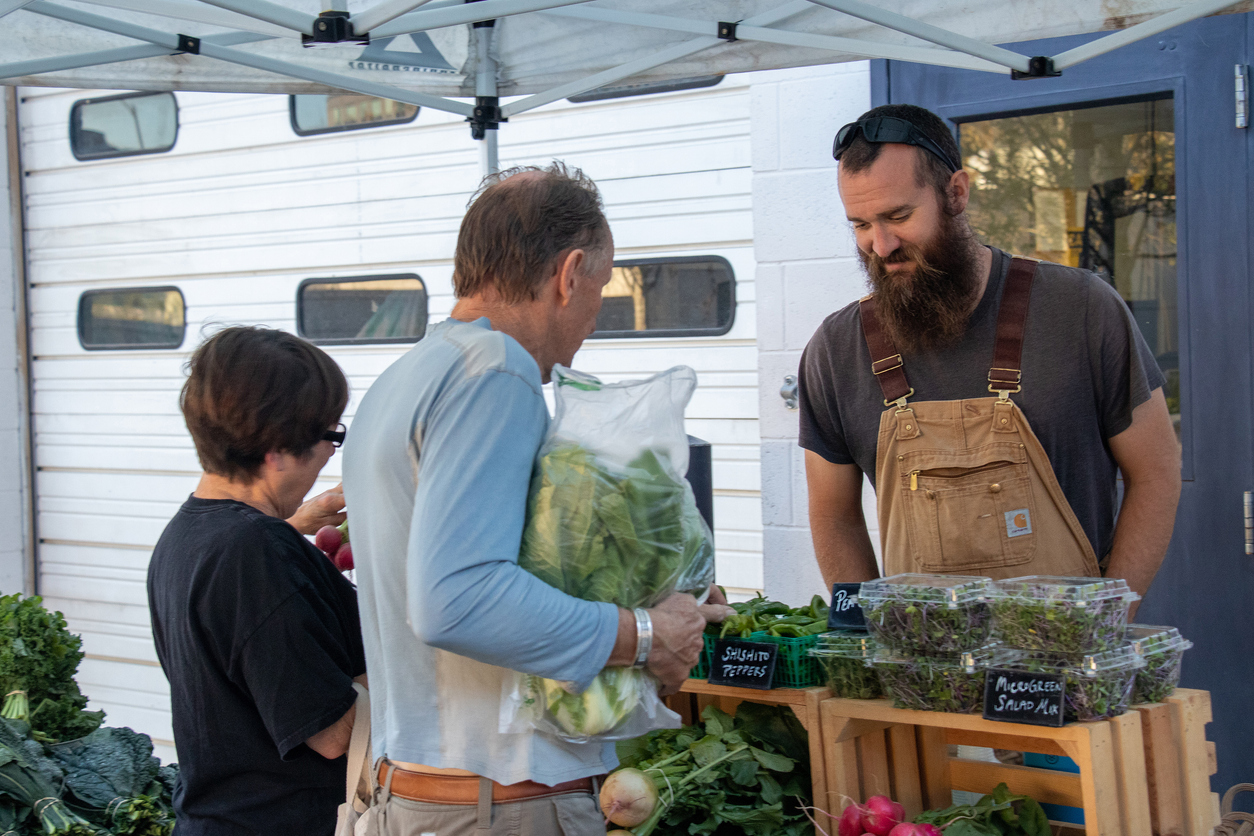
We've been at Little Italy since the very beginning, and this is our market stand. We've got 40 feet, probably about 100 different items, different varieties of fruits and vegetables. All come from our farm in Escondido — 150 acres, all certified organic.
Most of our members are very loyal to us. We're one of the few certified organic farms in this area. They basically fall in love with our produce here.
Takeaway:
Nobody joins a CSA off a flyer alone. They join after they've eaten something. A market is the cheapest, fastest way to get your food into a stranger's mouth — and that's an acquisition cost, not a sales day.
We introduce them to our CSA, and there's where they get the best value for our product. They get the product for a lesser price, and they're secured the items. So when they come and pick up here, they know what they're going to get.
This is where our members pick up our boxes. They come here, they check in, they purchase online, and they pick up their box. Really easy process.
They also have an online store where they can purchase exactly what they want, and they can have a box here waiting for them. Even if they show up at two o'clock and we're completely sold out, their items are still here.
There are flyers on the table too, every week of the year. Most farms push the CSA in February and go quiet by June. JR's stand is open all fifty-two weeks, so the pitch is open all fifty-two weeks.
Takeaway:
This is the whole argument in one sentence. A market that ends when the produce runs out is a sales day, and sales days are what farmers are right to question. A market where members' boxes are waiting is a pickup site that also happens to sell retail — and it keeps earning after the table is bare.
.webp)
Honestly, just staying consistent. Staying consistent with good quality, representing the farm really well and showcasing the best of what we have available. Putting that in the box, letting people taste what's really grown on our farm.
So I think doing that — just the flavor, the quality, and the reputation that we have — has got people to continue to come back, and new subscribers to subscribe.
Takeaway:
There's no campaign in that answer. Forty years of showing up the same way is what makes the introduction at the stand convert. Farms that dip in and out of markets never get to find out whether markets work, because the thing being tested was never the market.
You may well be right — about your markets, and about markets as a sales channel.
The question worth re-asking is a different one: how many of your current members first met you at a market? Most farms have never counted. If the answer is a lot, the market isn't a sales channel that's underperforming. It's an acquisition channel you've been grading on the wrong test.
And if the answer is almost none, that's worth knowing too. It means the stand isn't set up to convert, which is a fixable problem — the February piece on JR's market setup walks through what that looks like.
The part Michael calls simple has a lot behind it. Sixteen markets means something changes almost every week — a market closes, a route runs behind, a field finishes early.
Farmhand runs those pieces for JR: the website, the weekly box blog and its recipes, the flyers on the market table, the Nextdoor ads in the neighborhoods around each market, the delivery routes, and the member notices when something moves. When the sweet potato field finished in August, every order carrying sweet potatoes was found, cancelled and credited that day, and each of those members was told why. When there's a surplus, one text goes out and members reply with a number to add that many to their next box.
None of that is why anyone joins. Michael's produce is why they join. It's why they stay.
None of this makes markets right for every farm. Plenty of growers have run the numbers honestly, counted the members too, and still concluded it isn't worth the day. That's a real answer.
But if you're still setting up every week, judge the market on the members it brings you, not on what the till says at four o'clock. Members are what pays for next season.
Before your next market, answer three things:
✅ How many of your members first found you at a market?
✅ Could a shopper who loved something today join before they got to their car?
✅ If you sold out at two o'clock, would a member's box still be there?
If you can't answer the first one, that's the number to start tracking. It's the one the whole debate turns on.
 Nate BeaulacPrairie Creek FarmsKellyville, OKSocial · TikTokSocial
 Megan NeubauerPure Land FarmMcKinney, TXEvents · U-pickEvents


.png)

.jpeg)




 Katie McDowellArmagh CreameryDublin, TXDairy · PricingDairy
.jpg)


.png)
.webp)