
You Can’t Schedule a Fluke
Farmer Lee James runs Tierra Vegetables in Santa Rosa, CA with her brother Wayne. They started the farm in 1980. Last month Lee posted a one-take video about how to husk corn — it's at 4.6 million views, 74,000 reactions, and 1,800 comments, and it's still climbing. We asked her how she did it. She said she has no idea. Andrea Vodickova, who helps with Tierra's social media and shot the video, has a theory. Here they both are, in their own words.
Nobody was trying to make a hit
Lee: Not quite sure how it happened. Someone at market showed me a neat way to open up corn, and I tried it — wow, it worked.
A couple of weeks later Andrea was out here, and I told her I had this idea. I said if it's already been done, let's not do it. It hadn't been. So we made it.
It was a one-shot deal. I had an ear of corn ready, went and stood by the bin, and she shot it in one take, edited it lightly, and handed it to me to post. The thumbnail is a picture of my face that I hate. But it works.
Andrea: I've been helping Lee with Instagram for a couple of years, and teaching her video editing — which she picked up very quickly and got really good at, including voiceovers.
Which makes it hilarious that this is the video the algorithm picked up. Video editing is not easy and it's time consuming, and this one had the lowest production value of anything we've made. No cuts. One take. No music, no text, no voiceover.
Then it just took off
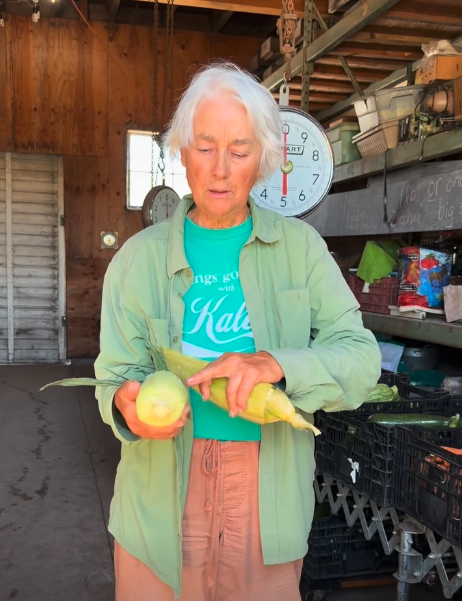
Lee: I put it up, went to market on Saturday, and didn't look at Instagram or anything for days. When I finally did, there were so many M's after the number of views. I'd never seen that before. It went viral all by itself.
People are seeing it in Australia now. It’s kind of creepy, that many people watching me talk about corn.
View the post here
Facebook took it, not Instagram
Lee: The funny part is where it landed. I posted it to Instagram and it cross-posted to Facebook, and Facebook took all the engagement. I couldn't even see the numbers on Instagram.
That's the whole reason I keep posting to both. You have no idea which one is going to pick something up.
Instagram isn't what it used to be anyway — so much garbage and ads that you have to sort through a ton of it to find anything good. I used to follow other farms and just see them. Now Facebook is where I actually check on my friends.
Andrea: Here's a tip: post on Instagram and select automatic reposts to Facebook for all your content — posts, reels, stories. It's exhausting to post to each platform separately. I feel like that's where people usually burn out.
Once I saw it taking off, I went back and added to the post
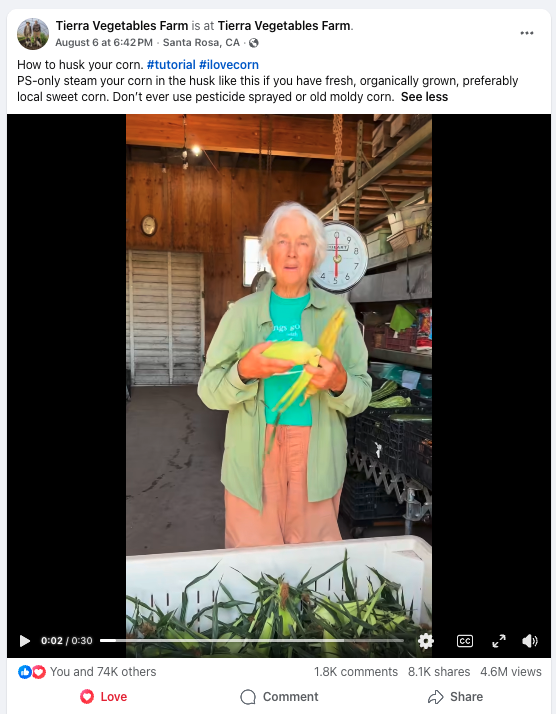
Lee: If four million people are about to steam corn in the husk, they need to know to only do it with fresh, organically grown, preferably local corn. Never pesticide-sprayed or old moldy corn. If the husk gives the corn a bad flavor, that corn's been sitting in storage a while.
That felt like the responsible thing to do with the attention.
People were more afraid of the worms than the pesticides
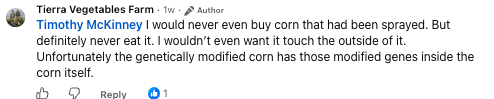
There was a lot of talk about corn worms and only a little about pesticides. You and I would never think of cooking nor buying nor eating corn that was laden with pesticides. But it seems as though people are more afraid of corn worms than they are of pesticides.
For 46 years, Tierra corn has never been sprayed.
Over the past few years there have been very few worms — the population is cyclic, and one year we had virtually none at all. Unfortunately insect populations in general have plummeted worldwide.
This year there are a few, and I'm hoping it doesn't bother you if they're boiled, microwaved or grilled. It reminds me of the time Rosendo heard they were good to eat and tried toasting a few on the comal at a barbecue. They were actually pretty good — tasted like crispy corn nuts — but he wanted to be so sure they were dead that he got them halfway to charcoal.
The comments
.png)
Lee: I wasn't going to read through thousands. I just saw where I was looking. A couple of people called me an old granny. I'm not anyone's grandmother. Somebody called me stupid, and I said well, I've got a lot of people commenting, including you, so I must not be too stupid.
But there wasn't much negative. No bots arguing. Real people, authentic.
Andrea: I think the reason it went viral is the engagement-provoking style behind it. If you read the comments, it's full of people telling stories about their own corn cooking method and how theirs is much better.
It turned into real engagement
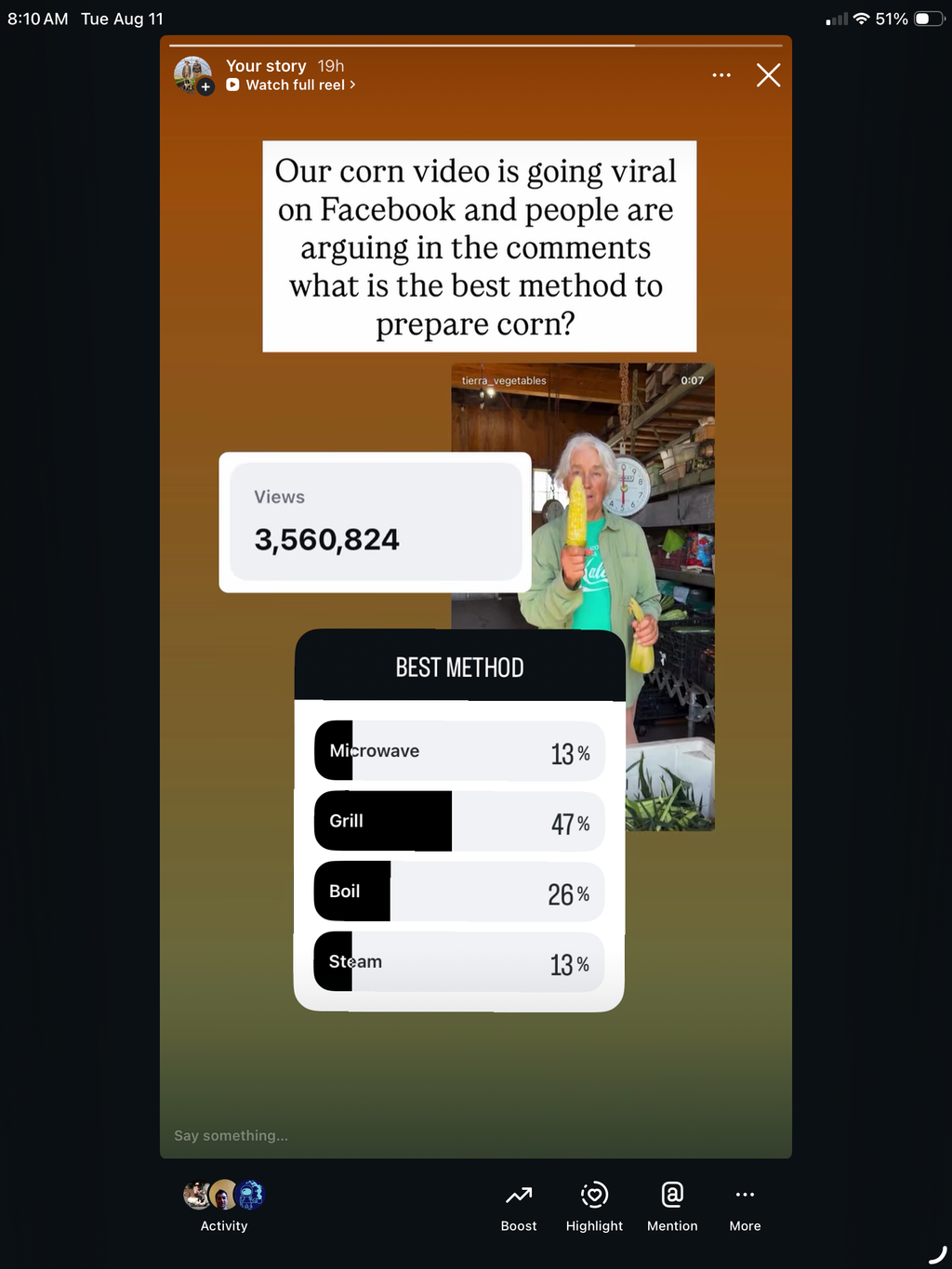
Lee: All the arguing about boil versus grill versus microwave turned into something. I shared the comments on our stories and ran a poll, and that got a real conversation going. And people bring it up at market now. They come up and say they saw the video. It's a nice way to start talking to somebody.
A few things I've learned out of it: cooked in the husk it stays hot much longer, and the silk has a lot of value — I sometimes pour the water into the dog's dinner afterward. A flat skillet with an inch of water works. And make sure the cob has something to hold onto.
Andrea: The follower count more than doubled. But conversation starter, engagement provoking, or even rage bait content brings in views — and honestly, does it bring community that turns into produce sales?
I wonder how it will affect our audience reactions moving forward. Maybe it will, maybe it won't.
We don’t really have a social strategy, but we’re on there all year
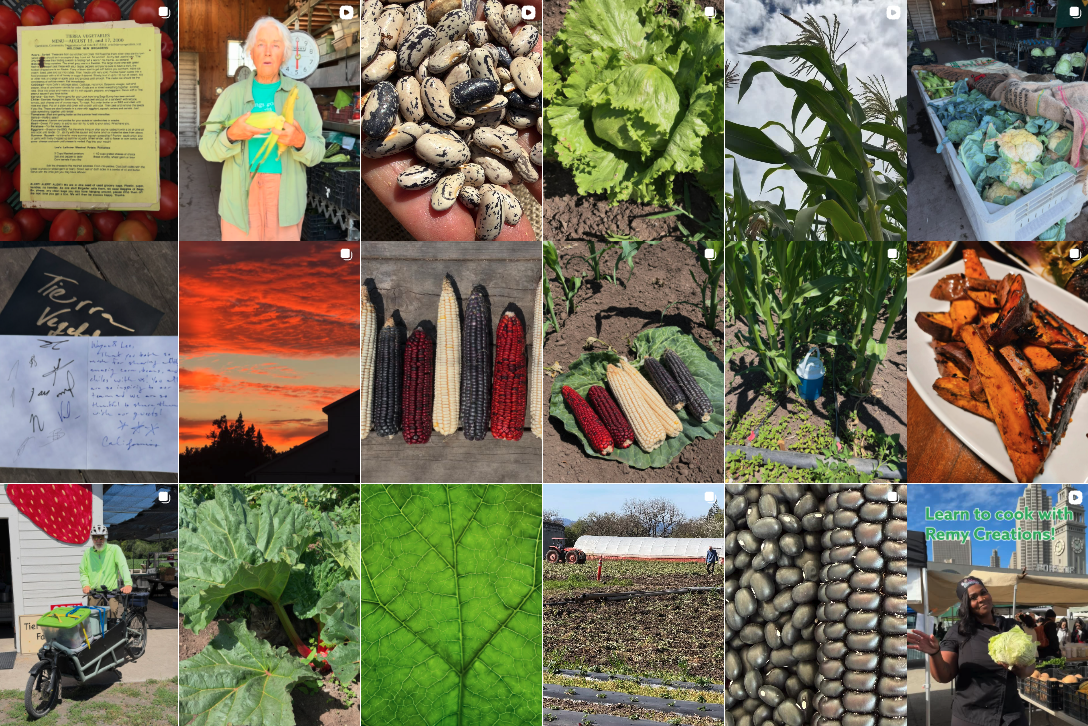
Lee: It started out sales-focused, then I started adding pretty pictures I take at the farm and the market. Humor, sometimes I don't get it but people like it. Wayne used to post more; now he sends them to me and misspells things and I have to fix them.
It's a good variety now, and the people who follow us actually pay attention.
I'm not an expert on social media. I call it a fluke. Others call it the Facebook algorithm in our favor.
— Lee James and Andrea Vodickova, Tierra Vegetables
What to take from this
If you’re wondering whether any of this is worth your time:
- Post all year, not when you need something. We’re on there all year, so the audience was already here when the algorithm picked us.
- Turn on automatic reposts. Post to Instagram and let it repost to Facebook — posts, reels, stories. Posting to each platform separately is where people burn out, and you can't predict which one will carry a video anyway.
- Don't wait until it's polished. The video that went everywhere had no cuts, no music, no text and no voiceover. It was the lowest-production-value thing they'd made.
- Use the attention to teach something. Once I saw it taking off, I went back and added the note about organic, local corn.
- Show the real thing, including the parts people flinch at. Worms in corn nobody sprays is the honest answer, and it’s what gave people something to talk about.
- Answer the comments you happen to see. I wasn’t going to read thousands. I replied where I was already looking, and it stayed human.
- Watch for it offline. The best part wasn’t the views. It’s people at market coming up to say they saw the video.
Lee and Wayne James have farmed Tierra Vegetables in Santa Rosa, CA since 1980, growing sustainably raised produce for their farmstand, CSA, and farmers markets.
Related Content
Get the story in your inbox every week.
Real success stories from working CSA and dairy farms–delivered every week (free).
Read by 5,000+ farmers every Friday